Finding traditional clothing for children is much easier today than it used to be. Parents can choose from dedicated children’s labels, established Pakistani fashion houses, and online stores that carry traditional outfits for boys and girls. Depending on the occasion, you can find everything from simple kurta shalwar sets to embroidered dresses, waistcoats, ghararas, lehengas, and festive three-piece outfits. 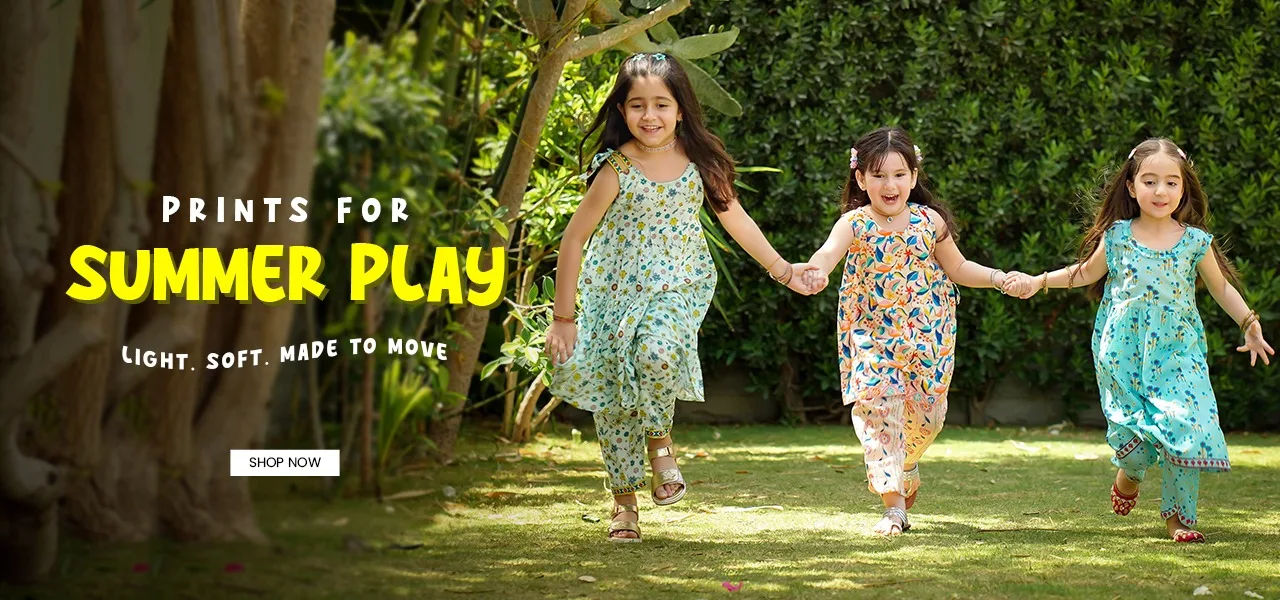 The right choice depends on the child's age, the event, the weather, and how formal you want the outfit to be.
Some kids clothing brands focus heavily on eastern styles, while others offer a mixture of eastern and western clothing. Current Pakistani collections show that traditional children's fashion is available in a wide range of designs and price points. (GulAhmed Ideas PK)
For parents comparing kids clothing brands, it helps to look beyond the appearance of an outfit. Fabric, sizing, stitching, comfort, washing requirements, and the child's ability to move comfortably can matter just as much as embroidery or color. A beautiful outfit that is uncomfortable may spend most of the event hanging in the wardrobe.
Gul Ahmed Ideas
Gul Ahmed is one of the established Pakistani names offering children's eastern clothing. Its current kids collection includes traditional options such as kurtas, pajama styles, waistcoats, and eastern sets. The brand specifically presents its kids eastern wear for occasions such as Eid and family weddings. (GulAhmed Ideas PK)
For boys, waistcoat outfits can be particularly useful for formal family events. A simple kurta with a waistcoat can create a traditional appearance without requiring an overly elaborate outfit.
Girls can also wear eastern silhouettes depending on the collection available at the time. The major advantage of a large established brand is that parents can usually find both everyday and occasion-oriented options across different seasons.
When shopping from Gul Ahmed or other kids clothing brands, check the current size chart rather than assuming that the same numerical size will fit every child in exactly the same way.
Rollover Kids
Rollover Kids is another option worth considering, particularly for parents looking specifically for children's eastern clothing. Its current eastern collection includes outfits for children from approximately 3 to 14 years, with kurta sets, kurta shalwar outfits, embroidered designs, and other traditional styles. (Rollover Kids Company)
The girls' collection includes embroidered two-piece kurta sets and traditional silhouettes designed for festive and everyday use.
One practical feature is the availability of different sizes within the same designs. This can make it easier to dress siblings in coordinated traditional outfits without necessarily buying identical clothing.
Rollover also emphasizes practical features such as breathable fabrics and comfortable cuts. These details are important because children generally need more freedom of movement than adults wearing formal clothing.
Cougar
Cougar has also developed a dedicated kids eastern wear collection. Its current selection includes traditional clothing for both boys and girls. Boys can find kurta shalwar sets and embroidered kurtas, while girls' options include gharara, sharara, lehenga choli, and two-piece eastern designs. (Cougar Clothing)
This makes Cougar particularly useful when parents are shopping for several different types of traditional clothing from the same place.
For a boy attending Eid celebrations, a simple kurta shalwar may be enough. For a wedding, a more decorated kurta or waistcoat-style outfit can provide a more formal appearance.
For girls, the difference between a casual eastern outfit and a formal festive dress can be substantial. A lightweight two-piece outfit may work well for daytime events, while a gharara or embellished set may be more suitable for an evening wedding.
Little & Loom
Little & Loom offers a dedicated eastern wear section for children, covering both boys and girls. Its current range includes kameez shalwar, kurta trouser sets, waistcoats, three-piece outfits, kaftans, gharara sets, and other traditional designs. (Little & Loom)
The brand's boys' options are particularly useful for parents who want a coordinated traditional appearance. A kurta, trouser, and waistcoat combination can be used for Eid, weddings, family celebrations, and other formal occasions.
Girls' options include more decorative eastern silhouettes, including festive dresses and coordinated sets.
One useful approach with a brand like this is to decide how formal the occasion is before browsing. Otherwise, the large number of attractive festive outfits can make it surprisingly difficult to choose something practical.
Ensemble Pakistan
Ensemble Pakistan is another retailer with a children's girlswear section that includes eastern and festive clothing. Its current kidswear selection includes ghararas, shalwar kameez, kurtas, frocks, kaftans, lehengas, angrakhas, pishwas, kalidars, and other traditional silhouettes. (Ensemble Pakistan)
This type of collection is particularly relevant when the child is attending a wedding or another formal celebration.
The main distinction is that many of these pieces are designed to look more like miniature formalwear rather than basic everyday clothing.
Parents should therefore pay close attention to the fabric and construction. Heavier embroidery, decorative details, or multiple layers can look impressive but may not be ideal for a child who will be running around, sitting on the floor, or attending a long event.
Taminzo and Other Multi-Brand Stores
Parents do not always have to buy directly from a single brand. Multi-brand online stores can provide another way to compare traditional children's clothing.
For example, Taminzo currently lists hundreds of children's eastern wear products across categories such as kurta pajama, kurta shalwar, shalwar kameez, gharara, lehenga, sharara, waistcoat, and other traditional styles. Its listed brands include Bin Shaukat, Lumira, Panache Apparel, Velvour, Wearmani, and others. (Taminzo)
This approach can save time when parents are unsure which label to choose.
Instead of opening numerous websites separately, you can compare silhouettes, fabrics, sizes, colors, and prices in one place. The trade-off is that you need to pay closer attention to individual product descriptions because different brands may have different sizing standards.
What Types of Eastern Wear Can You Find?
The phrase eastern wear covers a much wider range of clothing than just shalwar kameez.
For boys, the most common options include kurta pajama, kurta shalwar, kameez shalwar, waistcoat sets, and embroidered kurtas.
For girls, the selection can include shalwar kameez, kurta trousers, frocks, pishwas, ghararas, shararas, lehengas, angrakhas, and kaftans.
The appropriate style depends largely on the occasion.
Everyday Eastern Wear
Everyday traditional clothing should be relatively simple and comfortable.
Cotton or lightweight blended fabrics are often more practical for children, particularly in warm weather. Simple prints, modest embroidery, and relaxed cuts can provide a traditional appearance without making the child feel overdressed.
A basic kurta shalwar is one of the easiest choices for boys.
For girls, a lightweight kurta with trousers or a simple two-piece suit can provide the same balance.
Eid Clothing
Eid is one of the most common occasions for buying eastern clothing for children.
Parents often want something more decorative than everyday clothing but still comfortable enough for visiting relatives and moving around throughout the day.
For boys, a kurta shalwar with a waistcoat is a reliable traditional combination.
For girls, embroidered suits, ghararas, shararas, and festive two- or three-piece outfits are common choices.
The important thing is not to confuse decoration with comfort. Children do not necessarily need the most heavily embroidered outfit available.
Wedding Wear
Weddings allow parents to choose more formal designs.
Boys can wear embroidered kurtas, waistcoats, or more structured traditional sets.
Girls have a broader selection, including lehengas, ghararas, pishwas, angrakhas, and embellished shalwar kameez.
For a long wedding event, however, comfort should still be considered. Scratchy fabric, uncomfortable lining, heavy embellishment, or tight sleeves can become irritating after several hours.
How to Choose Between Kids Clothing Brands
There is no single brand that will suit every child or every occasion. Instead, compare the clothing according to several practical factors.
Check the Fabric
Fabric should be one of the first things you examine.
Cotton and lightweight fabrics can be useful for warm weather. Heavier fabrics may be appropriate for winter or formal evening events.
For younger children, soft materials are especially important because rough seams or decorative surfaces can cause discomfort.
Look at the Size Chart
Children grow quickly, but buying much larger clothing is not always a good solution.
An oversized outfit can become difficult to manage, particularly when the child is walking, playing, or participating in a family event.
Use the brand's measurements where available. Compare chest, length, waist, and sleeve measurements rather than relying only on age labels.
Consider the Occasion
A wedding outfit does not need to become a child's everyday outfit.
If you are buying clothing for school events, family lunches, Eid visits, or casual gatherings, simpler designs can offer greater value because they may be worn more frequently.
For a wedding or major celebration, spending more on a formal outfit may make sense if the design and quality justify it.
Think About Movement
Children sit, walk, run, climb, and play.
Traditional clothing should accommodate these movements.
For boys, trousers or shalwars should not be excessively tight. For girls, skirts and trousers should provide enough room for comfortable movement.
Elasticated or adjustable waist designs can also be useful for younger children.
Check Washing Instructions
Children's clothes are likely to encounter food, drinks, dust, and outdoor play.
An expensive outfit that requires highly delicate care may not be practical for frequent use.
Before purchasing, check whether the item can be washed at home, whether it requires dry cleaning, and whether embroidery needs special handling.
Should You Buy Matching Outfits?
Matching family clothing has become increasingly popular for Eid and weddings.
Parents may choose coordinated colors rather than completely identical outfits.
For example, a father and son might wear white kurtas with matching waistcoats, while a mother and daughter could coordinate colors without wearing exactly the same design.
This approach generally looks more natural and gives children clothing that feels appropriate for their age.
Little & Loom, for example, currently offers several coordinated boys' eastern combinations that can be used as the foundation for a family festive look. (Little & Loom)
How Much Should You Spend?
The right budget depends on how often the clothing will be worn.
For everyday clothing, durability and comfort should usually receive more attention than elaborate decoration.
For Eid, a moderately formal outfit may offer better value because it can potentially be worn to several gatherings.
For weddings, parents may decide to spend more on a special outfit, particularly if it can be reused for future celebrations.
It is also worth remembering that children can outgrow expensive clothing surprisingly quickly. A very high price does not automatically mean better value.
Online Shopping vs Physical Stores
Online shopping gives parents access to a much wider range of styles.
It is particularly convenient when searching for a specific type of traditional outfit, such as a gharara, waistcoat, or embroidered kurta.
However, physical stores have one major advantage: you can examine the fabric and construction before purchasing.
For younger children, trying clothing on can also help identify problems with sleeve length, waist fit, neck openings, or overall comfort.
A practical strategy is to use online stores for research and price comparison, then make the purchase based on the return policy, sizing information, and confidence in the seller.
Common Mistakes Parents Make
One common mistake is choosing an outfit entirely based on appearance.
A photograph can make a dress look perfect, but children experience clothing differently from adults.
Another mistake is ignoring the weather. A heavily layered outfit can be uncomfortable during a warm outdoor event.
Parents also sometimes buy clothing that is too formal for the child's personality. If a child dislikes elaborate clothing, a simpler traditional outfit may actually be worn more often.
Finally, avoid waiting until the day before an important event. Popular sizes can sell out, and online exchanges can take time.
Conclusion
There are now plenty of kids clothing brands offering eastern wear, ranging from established Pakistani fashion names to dedicated children's labels and multi-brand online retailers. Gul Ahmed, Rollover Kids, Cougar, Little & Loom, Ensemble Pakistan, and retailers such as Taminzo demonstrate the variety currently available to parents. (GulAhmed Ideas PK)
The best choice depends on what the child actually needs. A simple cotton kurta may be ideal for everyday wear, while a waistcoat set can work well for Eid or a family gathering. Girls can choose from traditional suits, ghararas, shararas, pishwas, lehengas, and other festive silhouettes depending on the occasion.
The most useful way to compare kids clothing brands is to look at the complete picture rather than focusing only on the design. Consider fabric, size, comfort, construction, washing requirements, price, and how frequently the child is likely to wear the outfit.
Eastern clothing should allow children to enjoy the occasion rather than spend the entire day adjusting uncomfortable sleeves, heavy layers, or restrictive clothing. With the growing selection of children's traditional fashion, parents can usually find an outfit that respects cultural style while still allowing children to dress and move like children.